
"The Diagnosis That Changed Everything"

Seven years of being dismissed, minimized, and misunderstood. One diagnosis that finally made sense of it all — and a community that helped me rise.
I was 24 years old when a doctor finally put a name to the chaos happening inside my body. Seven years of irregular periods, unexplained weight gain, hair loss, and being told "you're just stressed." Seven years of feeling like I was living in a body that betrayed me at every turn — and not one person in a white coat connecting the dots.
The diagnosis was Polycystic Ovary Syndrome. PCOS. Three letters that would become the center of gravity for the next chapter of my life. I remember sitting in that exam room, staring at a pamphlet the doctor slid across the desk without making eye contact, thinking: this is it? A pamphlet?
"I had spent years apologizing for a body that was simply trying to tell me something I wasn't being taught to hear."
What hurt most wasn't the diagnosis itself. It was the realization of how long I had been dismissed. I was 17 the first time I went to a doctor about my periods. I was told losing weight would help. I was 19 when the hair started thinning at my temples — told it was stress. I was 21 when the acne along my jawline became impossible to ignore — told to try a different cleanser. Every single time, a symptom that deserved investigation was handed back to me as a personal failing.
The Weight of Not Knowing
There's a particular grief that comes with a delayed diagnosis. It's not just about the years of unnecessary suffering — though that pain is real and valid. It's about all the ways you internalized those dismissals. I had spent years apologizing for a body that was simply trying to tell me something I wasn't being taught to hear.
I blamed myself for the weight I couldn't lose no matter how carefully I ate. I blamed myself for the fatigue that made 8 hours of sleep feel like nothing. I blamed myself for the mood swings that strained relationships with people I loved. Every failure felt personal, because nobody had told me it was biological.
Finding My People
The turning point came not from medicine, but from community. A friend sent me a link to an online group for Black women with PCOS. I almost didn't click it. What I found when I did changed my life more than any prescription ever has.
There were women who described my exact symptoms — the same ones I had been told were all in my head. Women who had navigated the same dismissals, faced the same doctors, felt the same shame. And women who had come out the other side, not just surviving, but genuinely thriving.
That community taught me how to advocate for myself. How to walk into a doctor's office with documentation, not just symptoms. How to request specific tests, ask for referrals, and refuse to leave without answers. They gave me language I hadn't had before — and language is power.
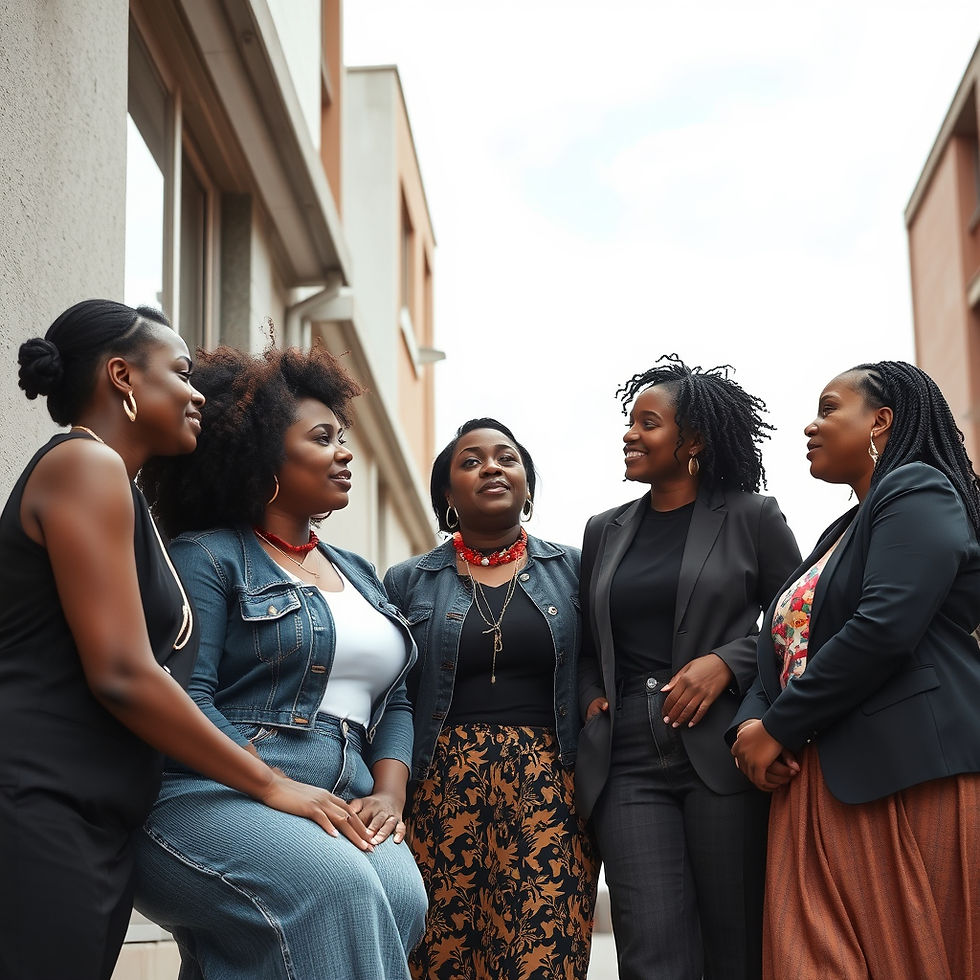
Group of Woman
What Thriving Actually Looks Like
I want to be honest: managing PCOS is not a straight line. There are weeks where everything is balanced — my hormones, my energy, my mental health. And there are weeks where the fatigue rolls back in like a tide, where I have to remind myself that this is not a moral failure. It's a condition. And I am managing it.
Thriving, for me, looks like knowing my body well enough to advocate for it. It looks like a care team that listens — that I had to fight to build, but that I have. It looks like this moment, writing these words, knowing that somewhere another 17-year-old is sitting in a doctor's office being handed a pamphlet without eye contact. And hoping that she finds her way to a community that tells her the truth.

Comments